 By
By Introduction
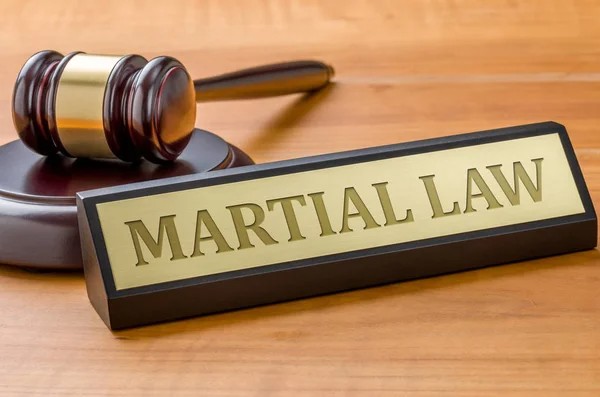
What happens if martial law is declared? In simple terms, martial law is a rare situation where military authority temporarily takes over some functions normally handled by civilian governments. It is usually considered during extreme emergencies such as invasion, large-scale rebellion, widespread violence, or situations where ordinary law enforcement can no longer maintain order. In the United States, martial law is not clearly defined in one single federal statute, and its scope is limited by the Constitution, court decisions, and laws such as the Posse Comitatus Act and the Insurrection Act.
Many people imagine martial law as a complete suspension of democracy, but the legal reality is more complex. Courts, governors, legislatures, and constitutional rights continue to play an important role, and any use of military power is likely to face judicial review.
This article explains what happens if martial law is declared, who has the authority to declare it, how it could affect everyday life, and what historical examples reveal about its legal limits.
Key Statistics About Martial Law and Military Authority
| Fact | Data |
|---|---|
| Number of local martial law declarations in U.S. history | At least 68 |
| Nationwide martial law declarations in U.S. history | None |
| Federal suspension of habeas corpus | Once (Civil War) |
| Year: The Posse Comitatus Act was passed. | 1878 |
| Year the Insurrection Act was enacted | 1807 |
Source: U.S. legal history and congressional records.
What Is Martial Law?
Martial law is a temporary replacement of some civilian authority by military authority during severe emergencies. It differs from a state of emergency because a state of emergency generally expands government powers while keeping civilian institutions in charge. Under martial law, military officials may assume certain governmental responsibilities.
Martial law has historically been declared during:
- War
- Invasion
- Rebellion
- Major riots
- Natural disasters
- Breakdown of civil order
Most instances in U.S. history have been local rather than nationwide. Governors have usually declared martial law within individual states or cities.
Who Can Declare Martial Law?
This question has no simple answer because the Constitution does not explicitly define martial law.
Governors
Most state constitutions allow governors to declare martial law during emergencies within their states. These declarations are still subject to constitutional review.
The President
The President has authority as Commander in Chief and can deploy troops under laws such as:
- The Insurrection Act
- Certain federal emergency statutes
- National Guard authorities
However, the President’s power is not unlimited. Courts and Congress can review or limit actions taken under emergency authority.
The Posse Comitatus Act and Why It Matters
One major legal limit is the Posse Comitatus Act of 1878.
This law generally prohibits federal troops from performing ordinary civilian law enforcement functions unless Congress authorizes it.
Without exceptions such as the Insurrection Act, federal troops generally cannot:
- Conduct arrests
- Perform ordinary policing
- Investigate crimes
- Replace local police
This law reflects a long-standing American principle that civilian government should remain separate from military authority.
What Is the Insurrection Act?
The Insurrection Act is one of the most important exceptions to Posse Comitatus.
Passed in 1807, it allows the president to deploy military forces domestically to suppress rebellion, insurrection, or severe civil disorder under certain conditions.
The law has been used historically during:
- Civil rights enforcement
- Riots
- Resistance to federal law
- Major disturbances
Legal scholars continue to debate how broad these powers are and what limits courts may impose.
What Happens If Martial Law Is Declared for Ordinary People?
If martial law is declared in a local area, daily life could change significantly.
Possible effects could include:
Curfews
Authorities could impose:
- Nighttime curfews
- Restricted movement
- Road closures
Increased Military Presence
Residents may see:
- National Guard units
- Federal troops
- Military checkpoints
Limits on Gatherings
Public assemblies might be restricted if officials believe they threaten public safety.
Transportation Controls
Authorities could regulate:
- Travel
- Public transit
- Access to specific areas
Temporary Restrictions
Some activities may require permits or authorization.
The extent of these restrictions would depend on the emergency and court review.
Could Constitutional Rights Be Suspended?
This is one of the biggest questions people ask.
Constitutional rights do not automatically disappear during martial law.
However, courts have recognized that some rights may face temporary restrictions in extreme circumstances. Examples can include:
- Curfews
- Movement restrictions
- Emergency searches
- Assembly limitations
Courts generally review whether restrictions are necessary and constitutional.
The suspension of habeas corpus is a separate constitutional issue and has occurred federally only once during the Civil War.
Could Elections Be Delayed?
Many people wonder whether martial law could stop elections.
Under U.S. law, election authority largely belongs to states and Congress.
There is no automatic rule stating that martial law cancels elections. Any attempt to change election dates would face major constitutional and legal questions.
Historical Examples of Martial Law in America
Examples include:
| Event | Year |
|---|---|
| New Orleans after Battle of New Orleans | 1815 |
| Civil War period | 1860s |
| The San Francisco earthquake | 1906 |
| Hawaii after Pearl Harbor | 1941 |
| Civil rights disturbances | 1960s |
These examples show that martial law has usually been temporary and geographically limited.
Important Legal Cases
Ex parte Milligan (1866)
The Supreme Court ruled that military tribunals generally cannot replace civilian courts when civilian courts remain open. This remains one of the most important limits on martial law.
Luther v. Borden
This case recognized that martial law can exist under certain emergency conditions but remains subject to constitutional principles.
Martial Law vs. State of Emergency
| Martial Law | State of Emergency |
|---|---|
| The military may exercise authority. | Civilian government remains in charge |
| Rare | More common |
| Severe crises | Broad emergencies |
| Possible movement restrictions | Limited emergency powers |
| Military role expanded | Civil agencies remain primary |
Credible Resources
- U.S. Constitution Annotated: https://constitution.congress.gov/
- Brennan Center Martial Law Guide: https://www.brennancenter.org/
- U.S. Department of Justice: https://www.justice.gov/
- Library of Congress: https://www.loc.gov/
- National Archives: https://www.archives.gov/
- U.S. Congress: https://www.congress.gov/
Key Takeaways
- Martial law is rare and usually local rather than nationwide.
- Governors and presidents may have limited emergency authority depending on the situation.
- The Posse Comitatus Act generally restricts military policing.
- The Insurrection Act provides an important exception.
- Constitutional rights do not automatically disappear.
- Courts remain an important check on emergency powers.
- U.S. history shows that martial law has been temporary and subject to legal review.
- A nationwide declaration would face significant constitutional challenges.
