
 By
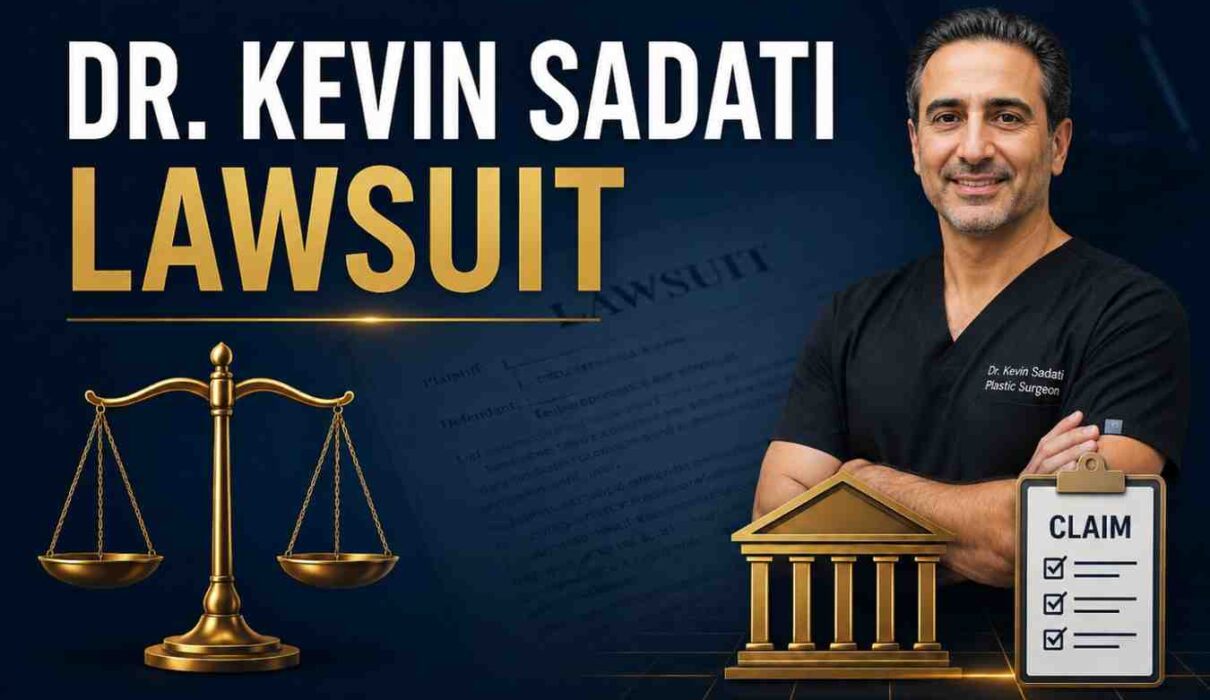
By A medical malpractice lawsuit has been filed against Dr. Kevin Sadati, a well-known facial plastic surgeon based in Newport Beach, California. The case, filed in Orange County Superior Court under Case No. 30-2018-01006528, involves a former patient alleging professional negligence during a cosmetic procedure at his clinic, the Gallery of Cosmetic Surgery. The court denied a defense motion for summary judgment in 2022, meaning the case had enough disputed facts to proceed. As of 2026, no final verdict has been publicly issued, and Dr. Sadati continues to practice.
This article covers the full picture: who Dr. Kevin Sadati is, what the lawsuit claims, how the defense has responded, what the court has ruled so far, and what any patient considering cosmetic surgery should know before making a decision.
The Kevin Sadati lawsuit has drawn attention online as people search for information about legal claims, patient concerns, and allegations connected to cosmetic surgery procedures. While details surrounding the case may vary depending on the source, discussions about the Kevin Sadati lawsuit largely focus on patient experiences, medical outcomes, and legal accountability in the field of plastic surgery. Lawsuits involving cosmetic procedures often raise broader questions about informed consent, surgical expectations, postoperative care, and patient safety. As interest in the matter continues to grow, many individuals are seeking reliable updates and factual information regarding the Kevin Sadati lawsuit and its potential impact on both patients and the cosmetic surgery industry.
Who Is Dr. Kevin Sadati?
Dr. Kevin Sadati is a board-certified facial plastic and reconstructive surgeon with over two decades of experience. He operates the Gallery of Cosmetic Surgery and Aesthetic Lounge at 359 San Miguel Drive, Suite 200, Newport Beach, California 92660. His areas of specialty include facelifts, neck lifts, rhinoplasty, eyelid surgery, and non-surgical facial rejuvenation treatments.
He earned his undergraduate degrees in molecular cell biology and Near Eastern art and history from the University of California, Berkeley. He completed his medical degree at Midwestern University in Illinois, followed by residencies in general surgery at Michigan State University and otolaryngology and facial plastic surgery at the Medical College of Pennsylvania in Philadelphia. He holds certifications from both the American Board of Cosmetic Surgery and the American Osteopathic Board of Otolaryngology and Head and Neck Surgery.
Beyond his surgical career, Dr. Sadati has developed a signature technique called the Preservation Deep Plane Facelift, which has been published in Plastic and Reconstructive Surgery, one of the field’s leading peer-reviewed journals. He has been voted “Best Cosmetic Surgeon” in Orange County by OC Register readers multiple years in a row and has presented his methods at national and international surgical conferences.
The contrast between his professional profile and the malpractice claims against him is exactly what makes the Dr. Kevin Sadati lawsuit a closely watched case in both legal and medical communities.
What Is the Lawsuit About?
The core legal action is a medical malpractice claim filed by a former patient identified in court documents as Jean Shir. The complaint centers on a cosmetic procedure performed at the Gallery of Cosmetic Surgery and raises three primary allegations.
1. Failure to Obtain Proper Informed Consent
The plaintiff claims she was not adequately informed of the realistic risks and possible outcomes before undergoing surgery. Under California law, surgeons are required to disclose all material risks, alternatives, and reasonable expectations before any procedure. For elective cosmetic procedures — where the patient chooses surgery for aesthetic rather than medical reasons — the legal standard for informed consent is considered especially high. The plaintiff alleges that this standard was not met.
2. Surgical Negligence
The lawsuit alleges that the procedure itself fell below the accepted standard of care for facial plastic surgery. In a malpractice case, this means the plaintiff must show that a reasonably skilled surgeon in the same field would have acted differently and that the deviation from that standard directly caused harm. This is typically established through expert medical testimony.
3. Post-Operative Complications and Follow-Up Failures
The plaintiff alleges physical complications following the surgery, including what court documents describe as facial nerve injury. She further alleges that her concerns during recovery were not adequately addressed and that follow-up care was insufficient. Some patient reviews on platforms such as Healthgrades describe similar experiences, post-surgery complications, and follow-up responses in which patients felt their concerns were dismissed—though reviews are not legal evidence.
The Court Record: What Has Actually Happened
Understanding the legal timeline is important because much of the online discussion around this case misrepresents what the court rulings mean.
2018 — Case Filed The plaintiff filed a formal complaint in Orange County Superior Court, initiating the legal process. The operative complaint included a cause of action for professional negligence.
2018–2022 — Discovery Phase: Both sides gathered evidence. This included a review of Dr. Sadati’s medical records, the patient’s medical records from multiple providers, deposition transcripts, and expert witness declarations. The defense submitted a declaration from Dr. Terry Dubrow, a well-known plastic surgeon, in support of their motion for summary judgment.
November 2022 — Motion for Summary Judgment Denied. This is the most significant public ruling in the case. Judge Linda S. Marks denied Dr. Sadati’s motion for summary judgment. A summary judgment motion asks the court to end the case early because there are no genuine disputed facts requiring a trial. When the court denies this motion, it means the judge found that real factual disputes exist — particularly, according to the ruling, around the “timeline and scope of the facial nerve injury” the plaintiff allegedly sustained.
The court’s ruling specifically noted that the plaintiff’s expert, Dr. Hershcovitch, raised triable issues around whether Dr. Sadati’s treatment met the standard of care, depending on when and how the nerve injuries occurred. Critically, this ruling is not a finding of guilt or liability. It simply means the case must proceed to further proceedings or trial.
2023–2026 — Ongoing Proceedings As of 2026, the case remains active. Both sides continue to gather evidence and expert opinions. Many medical malpractice cases are resolved through settlement before reaching a jury trial. A settlement does not equal an admission of wrongdoing; it is often a practical legal resolution chosen by both parties to avoid the time and expense of trial.
The Defense’s Position
Dr. Sadati’s legal team has denied all allegations and has presented several counter-arguments consistently throughout the case.
- Standard of care was maintained. The defense asserts that all procedures were performed following accepted protocols for facial plastic surgery.
- Informed consent was documented. Defense materials indicate that signed consent forms and pre-surgical consultations were conducted and that risks were disclosed.
- Causation is disputed. The defense argues that any complications the plaintiff experienced were the result of known, inherent surgical risks — not negligence — and that no cosmetic procedure can guarantee a perfect outcome.
- Patient compliance with post-operative instructions is also raised as a factor by the defense.
It is worth noting that Dr. Dubrow, the defense’s expert witness, reviewed the medical records and formed an opinion that Dr. Sadati’s actions fell within professional standards. The court’s denial of summary judgment did not mean the defense argument was wrong—only that factual disputes existed that required further legal examination.
How This Case Fits Into the Broader Landscape of Cosmetic Surgery Litigation
The Dr. Kevin Sadati lawsuit is not an isolated event. It reflects wider legal patterns in the cosmetic surgery industry across the United States.
Cosmetic surgery occupies a unique legal space compared to emergency or medically necessary procedures. Because these surgeries are elective — chosen for personal aesthetic reasons, not survival — courts apply a particularly strict lens to informed consent. Patients must genuinely understand what they are agreeing to, not just sign a form. When outcomes fall short of what was discussed in a consultation, patients have grounds to question whether their consent was truly informed.
Key reasons cosmetic surgery lawsuits are filed include the following:
- Outcome gaps — The surgical result looks significantly different from what was discussed pre-operatively.
- Inadequate risk disclosure — The patient was not warned about specific complications that later occurred.
- Post-surgical complications—Including nerve damage, scarring, asymmetry, or the need for corrective surgery.
- Poor follow-up care — Concerns raised during recovery were dismissed or not properly addressed.
- Billing for corrective procedures—Patients charged additional fees to fix problems arising from the original surgery.
None of these factors alone automatically proves malpractice. Courts require expert testimony establishing that a doctor’s actions fell below the professional standard of care and that this breach directly caused documented harm.
What Patient Reviews Say
Online reviews of Dr. Sadati are mixed, which is common for high-volume surgical practices. Healthgrades and RealSelf profiles show a range of experiences. Many patients report excellent results and describe Dr. Sadati as skilled, attentive, and professional. Some patients with long-term relationships with the practice describe him as the best doctor they have ever had.
However, a subset of critical reviews describes outcomes consistent with the themes in the lawsuit: unexpected complications, difficulty with post-operative follow-up, and results that did not match pre-surgical discussions. At least one Healthgrades review states directly: “Dr. Sadati ruined my face,” describing complications following a facelift and dissatisfaction with the response.
It is important to note that patient reviews are not legal evidence and do not establish malpractice. They are, however, part of the publicly available record that any prospective patient should consider when researching a surgeon. Positive reviews should also be weighed carefully—over 700 five-star reviews appear across his platforms, suggesting that the majority of his patients report positive experiences.
What This Means for Anyone Considering Cosmetic Surgery
Whether you are researching Dr. Sadati specifically or any cosmetic surgeon, this case offers practical lessons that apply broadly.
Before You Book a Consultation:
- Verify board certifications through official state medical board records and professional bodies such as the American Academy of Facial Plastic and Reconstructive Surgery.
- Search for any malpractice history through your state’s medical licensing board portal. In California, this is the Medical Board of California at mbc.ca.gov.
- Read reviews across multiple platforms — Healthgrades, RealSelf, Google, and Yelp — paying specific attention to how post-operative concerns were handled, not just the initial results.
During the consultation:
- Ask for a clear, written explanation of all possible complications, including the likelihood and severity of each.
- Ask specifically what the recovery timeline looks like and what is considered a normal versus an abnormal outcome.
- Do not sign consent forms under time pressure. You are entitled to take the documents home and review them.
- Ask what the process is if you are unhappy with the outcome or if complications arise.
After the consultation:
- Get a second opinion from a separately qualified surgeon before committing to any significant elective procedure.
- Keep copies of all pre-surgical consultations, consent documents, and aftercare instructions. That paper trail is critical if a legal issue arises later.
- Confirm who will be performing the procedure and whether any residents or assistants will be involved.
What to Do If You Believe You Were Harmed by a Cosmetic Surgeon
If you have undergone cosmetic surgery and believe the outcome resulted from negligence rather than inherent surgical risk, here are concrete steps to take.
Step 1 — Document Everything: Gather all pre-surgical paperwork, post-operative instructions, communications with the office, and photographs of your results at different stages of healing. Written records are your most important asset.
Step 2 — Seek an Independent Medical Evaluation. Have another qualified surgeon examine you and document their findings. An independent assessment provides the foundation for any legal claim.
Step 3 — Contact the California Medical Board. In California, you can file a complaint against a licensed physician at mbc.ca.gov. The Medical Board investigates complaints of negligence, unprofessional conduct, and violations of patient rights.
Step 4 — Consult a Medical Malpractice Attorney. Most medical malpractice attorneys offer free initial consultations and work on a contingency fee basis, meaning you pay only if you win. An attorney can review your records, advise you on whether your case has merit, and explain the statute of limitations in your state.
Step 5 — Act Within the Legal Time Window In California, the statute of limitations for medical malpractice is generally three years from the date of injury or one year from the date the patient discovered or should have discovered the injury, whichever comes first. Missing this deadline forfeits your right to sue, regardless of how strong your case may be.
Is Dr. Kevin Sadati still practicing?
Yes. As of 2026, the Gallery of Cosmetic Surgery remains open and operational in Newport Beach, California. No license suspension or medical board sanction against Dr. Sadati has been publicly confirmed. He continues to perform facial plastic surgery procedures and remains active in the professional and academic surgical community.
The existence of an ongoing lawsuit does not mean a doctor is guilty of malpractice or that their practice is unsafe. It does mean that specific allegations are being evaluated through the legal process, and the outcome of that process will ultimately determine any legal consequences.
Quick Reference Summary
| Detail | Information |
|---|---|
| Case Number | Orange County Superior Court No. 30-2018-01006528 |
| Plaintiff | Jean Shir (former patient) |
| Defendant | Dr. Kevin Sadati, Gallery of Cosmetic Surgery |
| Allegations | Professional negligence, informed consent failure, nerve injury |
| Key Ruling | Motion for summary judgment denied, November 2022 |
| Defense Position | All allegations denied; proper consent and standard of care maintained |
| Current Status | Active as of 2026; no final verdict publicly issued |
| Dr. Sadati’s Practice | Still open and operational in Newport Beach, CA |
FAQs
Q: What is the Dr. Kevin Sadati lawsuit about? It is a medical malpractice case filed in Orange County Superior Court by a former patient alleging professional negligence during a cosmetic procedure at Dr. Sadati’s Gallery of Cosmetic Surgery. The core claims involve failure to obtain proper informed consent, surgical negligence, and post-operative complications, including alleged facial nerve injury.
Q: Has Dr. Kevin Sadati been found guilty of malpractice? No. There is no public record of a final verdict against Dr. Sadati. The court denied his motion for summary judgment in 2022, allowing the case to continue, but a denial of summary judgment is not a finding of liability. Allegations must be proven in court.
Q: Is Dr. Kevin Sadati still practicing? Yes. As of 2026, the Gallery of Cosmetic Surgery remains open in Newport Beach, California. No medical board sanction or license suspension has been publicly confirmed.
Q: What does it mean that the summary judgment was denied? It means the judge found genuine disputed facts that could not be resolved without further legal proceedings or a trial. It is a procedural ruling, not a ruling on whether the defendant was negligent.
Q: What were the main allegations in the case? Three primary claims: the patient was not properly informed of surgical risks before the procedure; the surgery itself fell below the accepted standard of care; and the post-operative care and follow-up were inadequate after complications, including an alleged facial nerve injury, developed.
Q: How did the defense respond to the allegations? Dr. Sadati’s legal team denied all allegations. Their defense rested on signed consent documentation, evidence that the procedures followed accepted surgical practices, the inherent risk profile of cosmetic surgery, and questions about the cause and timeline of the plaintiff’s injuries.
Q: Could the case still settle before trial? Yes. The majority of medical malpractice cases in the United States settle before reaching a jury trial. A settlement is a legal resolution that does not constitute an admission of guilt by either party.
Q: What should I do if I have a bad outcome with a cosmetic surgeon? Document everything, seek an independent medical evaluation, and consult a medical malpractice attorney. In California, file a complaint with the Medical Board at mbc.ca.gov. Be mindful of the statute of limitations, typically three years from the date of injury in California.
Q: Does a malpractice lawsuit mean a surgeon is dangerous? Not necessarily. Many skilled surgeons face malpractice claims at some point in their career, particularly in high-volume practices. A lawsuit reflects a legal dispute, not a proven finding of negligence. What matters most is how the case is ultimately resolved and whether the doctor’s overall record shows a pattern of complaints or regulatory action.
Q: How can I verify a surgeon’s license and complaint history in California? Visit the California Medical Board website at mbc.ca.gov, search the physician’s name, and review their license status, board certifications, and any disciplinary actions. You can also verify board certifications through the American Board of Cosmetic Surgery and the American Academy of Facial Plastic and Reconstructive Surgery.
This article is for informational purposes only and does not constitute legal or medical advice. All legal details referenced are sourced from publicly available court records and published reports. For specific legal situations, consult a licensed attorney in your state.
