 By
By Can the President Fire Anyone? The Lisa Cook Supreme Court Case Fully Explained
Most people do not think about the Federal Reserve until gas prices spike, mortgages get expensive, or the news starts talking about a recession. But right now, a legal fight involving Lisa Cook’s Supreme Court arguments has quietly become one of the most important cases in modern American law. It is not just about one person’s job. It is about who really controls the economy: the experts Congress set up to manage it, or whoever happens to be sitting in the White House.
This case has moved fast, reached the highest court in the land, and drawn in some of the biggest names in American finance and law. Here is everything you need to know, explained as simply as possible.
Who Is Lisa Cook and Why Does Her Job Matter?
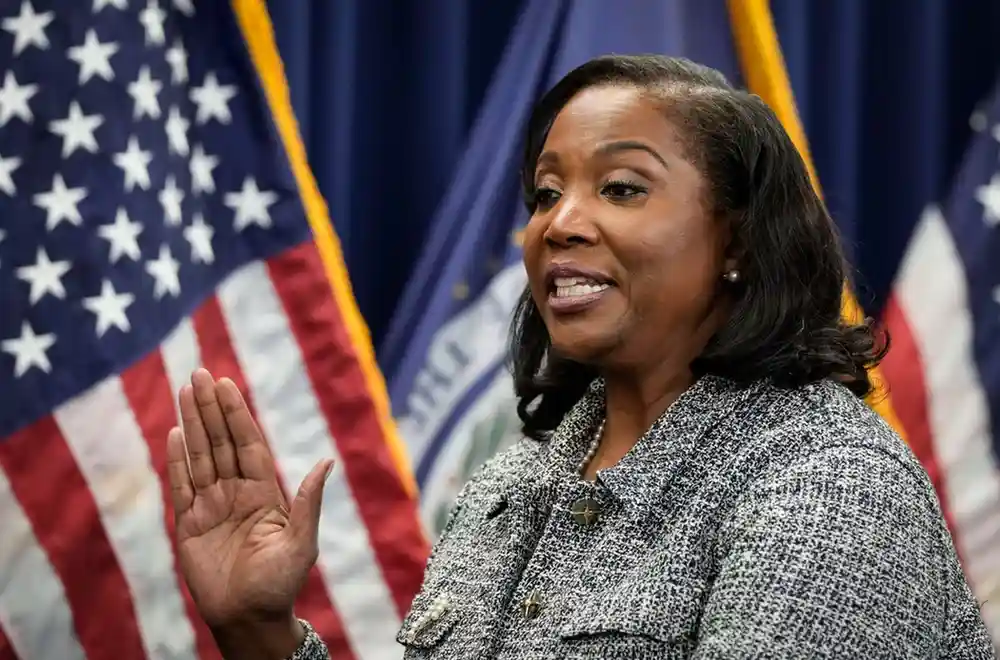
Lisa Cook is an economist, someone who studies how money, jobs, and markets work. President Joe Biden nominated her to serve on the Federal Reserve Board of Governors in 2021, and she was confirmed by the Senate in May 2022. She made history as the first Black woman ever to sit on the Federal Reserve Board.
The Federal Reserve, often called “the Fed,” is the central bank of the United States. It does not manage your personal checking account, but it controls something that touches every part of your financial life: interest rates. When the Fed raises rates, it costs more to borrow money. When it lowers them, borrowing gets cheaper. Those decisions ripple out and affect mortgage payments, car loans, credit card bills, business investments, and the overall job market.
Seven governors sit on the Federal Reserve Board, and they vote together on these major economic decisions. The board was specifically designed by Congress to be independent, meaning it is supposed to make decisions based on economic data, not political pressure. Congress built it that way more than a hundred years ago to protect the economy from short-term political thinking. A president facing re-election might want cheap money and low rates to make the economy feel good. The Fed’s job is to look beyond that and do what is actually healthy long-term.
Lisa Cook, since joining the board, had consistently voted alongside Fed Chair Jerome Powell on key decisions, including the careful and measured approach to adjusting interest rates in recent years.
How the Firing Happened and Why It Shocked Everyone
On August 25, 2025, President Donald Trump announced on Truth Social that he was firing Lisa Cook. The reason he gave: mortgage fraud. Trump alleged that before she ever joined the Federal Reserve, Cook had listed two properties, a house in Michigan and a condominium in Atlanta, as her “primary residence” on two different mortgage applications within two weeks.
Cook responded immediately and directly. She called the firing illegal and said flatly that no legal cause existed for her removal. Her attorney called it a smear campaign and described the allegations as vague, unsubstantiated, and lacking any proper legal basis.
Here is where the law becomes the center of everything. Under the Federal Reserve Act, the law that created the Fed back in 1913, a president can only remove a governor “for cause.” That legal phrase carries a lot of weight. It means there must be a proven, serious reason directly tied to the person’s conduct or job performance. Firing someone because of alleged conduct that happened years before they ever took the job, and which has never been proven in any court, is a very different thing.
What made this even more remarkable: in the entire 112-year history of the Federal Reserve, no president had ever tried to fire a sitting governor. Not once. This was uncharted territory from the very first day.
The Courts Step In—One After Another
Cook did not wait. She went straight to federal court in Washington, D.C., and asked a judge to block the firing while her case was heard.
On September 9, 2025, U.S. District Judge Jia Cobb issued a preliminary injunction, a court order stopping Trump from removing Cook while the lawsuit continued. Judge Cobb wrote that Cook had made a strong legal case that her removal violated the Federal Reserve Act’s “for cause” provision. She also made an important legal point: the law does not allow firing someone for conduct that happened before they even started the job.
The Trump administration appealed immediately. On September 15, the U.S. Court of Appeals for the D.C. Circuit rejected that request in a 2-to-1 decision. The appeals court agreed that Cook had a property interest in her position, meaning she had a legal right to it and that she was therefore entitled to some form of due process before being fired. Due process is a basic legal protection that says the government cannot take something important away from you without giving you fair notice and a chance to respond.
The administration then took its case to the Supreme Court, asking the justices to step in and allow the firing to take effect immediately.
What the Lisa Cook Supreme Court Showdown Looked Like
The Supreme Court’s first major move came on October 1, 2025. The justices declined to grant the administration’s emergency request to remove Cook right away. Instead, they ordered oral arguments to be held in January 2026. That decision itself was notable in several other cases where Trump moved to fire officials at independent agencies; the Supreme Court had sided with him temporarily. With Cook, they did not.
Oral arguments in Trump v. Cook were held on January 21, 2026. The courtroom that day was packed. Federal Reserve Chair Jerome Powell attended in person, along with several other central bank officials and former Fed Chair Ben Bernanke. Powell described the case as possibly the most important legal matter in the Fed’s 113-year history.
What happened inside the courtroom surprised a lot of people who had expected the conservative-majority Court to back the president.
Justice Brett Kavanaugh pushed back hard on the administration’s lawyer. He pointed out that once you allow a president to remove officials over old allegations that are difficult to disprove, it cuts both ways. A future president of either party could use the same tool against Trump appointees. Justice Amy Coney Barrett raised concerns that Cook was never given a real opportunity to respond to the mortgage fraud allegations before she was fired. Trump’s team argued that a Truth Social post counted as notice. The justices were not convinced. Justice Ketanji Brown Jackson questioned whether there was any real factual foundation for the removal at all. Justice Sonia Sotomayor pointed out that people’s living situations change all the time, especially when they take new jobs in new cities.
Chief Justice John Roberts signaled he was skeptical about sending the case back to lower courts rather than issuing a more definitive ruling.
The overall picture from that day: a majority of the justices appeared ready to rule against the administration.
The Bigger Legal Battle Behind This Case
This case sits inside a much larger debate: how much power does the president have to remove officials at independent agencies?
Most federal agencies are led by people who serve at the president’s pleasure, meaning the president can fire them for any reason. But independent agencies like the Federal Reserve were designed differently. Their leaders have fixed terms and can only be removed “for cause.” Congress set it up that way to keep these agencies out of day-to-day political battles.
Financial oversight bodies like the Fed exist for much the same reason regulators crack down on white-collar crime, corruption, and financial offenses to keep the financial system honest and free from political interference.
Trump challenged that structure at multiple agencies. In some cases, the Supreme Court sided with him. But the Court had previously signaled that the Fed sits in a different category, one with a unique legal history that sets it apart.
A ruling that lets Trump fire Cook could still be limited to the Fed’s specific situation. Or it could set a broader precedent that chips away at the independence of every major independent agency in the country. Those are the real stakes hiding behind the headline.
Why Every American Should Be Paying Attention
It is easy to hear “Federal Reserve governor” and think this has nothing to do with regular life. But consider what the Fed actually controls.
When the Fed raises interest rates, your mortgage payment goes up. When it lowers them, borrowing gets cheaper. When it stops making independent decisions and starts following political orders instead, the consequences land on ordinary people: higher prices, harder-to-get loans, job losses, and economic instability.
This case is just one example of how other recent legal and regulatory changes are affecting Americans right now, from the workplace to the broader economy.
The entire point of an independent central bank is to protect everyday Americans from politically driven economic decisions. If a president can remove anyone at the Fed simply by surfacing old, unproven allegations, that independence is gone in practice even if it still exists on paper.
A final ruling is expected before the Supreme Court’s current term ends, which is typically late June or early July 2026.
What the Final Ruling Could Mean for the Country
A ruling for Cook would confirm that the Fed’s independence is legally protected. A ruling for Trump would give presidents far more power over the Fed than anyone has held in a century, raising concerns across markets worldwide.
At its core, the Lisa Cook Supreme Court case tests whether legal protections for independent institutions actually hold. Whatever the outcome, it will shape American law for years to come.
Want to learn more about presidential power? Check out our related coverage on executive authority and the separation of powers.
